Staff Portal
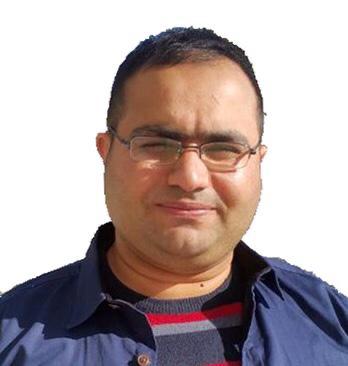
Mohammed Raji Mohammed Al-Alusi (Assistant Professor)
PhD in Civil Engineering - Structural Engineering
Lecturer
Civil - Engineering
moh.raji@uoanbar.edu.iq


Biography
Biography of Dr. Mohammed Raji Mohammed Al-Alusi
Dr. Mohammed Raji Mohammed Al-Alusi (born 14 January 1985) is a dedicated Iraqi academic and researcher specializing in Structural Engineering within the field of Civil Engineering. He currently serves as a faculty member in the Department of Civil Engineering, College of Engineering, where he contributes to both teaching and research.
Dr. Al-Alusi obtained his Bachelor of Science in Civil Engineering from the University of Anbar, Iraq in 2006, followed by a Master’s degree in Structural Engineering from the same institution in 2009. Driven by his passion for advanced research in concrete and structural performance, he pursued his doctoral studies at the University of Leeds, United Kingdom, where he earned his Ph.D. in Civil Engineering (Structural Engineering) in 2022.
His research focuses on the time-dependent behavior and durability of reinforced concrete structures, with particular emphasis on corrosion effects, lightweight concrete innovation, and sustainable construction materials. He has authored and co-authored several scientific publications in reputable international journals, covering topics such as:
-
Flexural performance and tension stiffening loss in corroded reinforced concrete beams.
-
Mechanical properties and shrinkage of lightweight concrete reinforced with waste plastic fibers.
-
Structural improvements of RC beams using Ponza aggregate and plastic waste fibers.
-
Load–slip behavior of composite push-out specimens with various shear connectors.
-
Comparative studies on composite RC T-beams with different stud distributions.
-
Sustainability-driven innovations, including green concrete beams and ferrocement slabs containing waste glass powder and plastic aggregates.
Through both experimental investigations and numerical simulations, his work contributes to advancing sustainable construction practices and improving the safety, resilience, and efficiency of concrete structures.
As an academic, Dr. Al-Alusi is committed to mentoring engineering students and fostering innovation in the civil engineering field. His dual expertise in theoretical research and practical structural analysis positions him as an influential voice in Iraq’s engineering education and infrastructure development.
Publication
|
Time-Dependent Flexural Performance and Loss of Tension Stiffening of Corroded Reinforced Concrete Beams etheses.whiterose.ac.uk |
|
An experimental investigation of the mechanical characteristics and drying shrinkage of a single-size expanded polystyrene lightweight concrete reinforced with waste plastic fibres |
|
Studying the possibility of structural performance improvement of RC beams made of lightweight Ponza aggregate with the addition of PWFs |
| Experimental Comparative Study on Composite RC T-Beams Behavior with Diverse Distributions of Headed Studs in Sagging–Moment Tensioned Concrete Media |
Enhancing Sustainability in Construction: Numerical Investigation on Green Concrete Beams Strengthened with Composite Strips |
| Structural Behavior of One-Way Sustainable Ferrocement Slabs Contain Wastes Glass Powder and Plastic Aggregate |
Lectures

Academic certificates
|
Ph.D. in Civil Engineering- Structural Engineering University of Leeds (UK) Leeds, United Kingdom Apr 2016 - Apr 2022 |
|
Master in Civil Engineering ( Structural Engineering) University of Anbar- College of Engineering Al-Anbar- Iraq Sep 2006 - Apr 2009 |
|
Bachelor of Civil Engineering BS.c University of Anbar- College of Engineering Al-Anbar- Iraq Oct 2002 - Aug 2006 |
Supervision
No supervision at the moment
Other
-
Supervising Students: Mentored undergraduate or master’s students in their research projects, especially in topics related to AI and software engineering.
-
Workshops & Seminars: Participated in scientific workshops and local seminars on digital transformation, AI in governance, and smart cities.
-
Community Contribution: Shared expertise with local government bodies (e.g., through the بلديتي project) by applying academic knowledge to practical, real-world problems.
-
Academic Discussions: Engaged in collaborative discussions with peers from U.S. and Iraqi universities on emerging AI tools and software engineering practices.
-
Publishing/Editing: Contributed to the preparation and editing of manuscripts in computer science and AI (even if not always as first author).
-
Research Networking: Attended international webinars and online academic conferences to stay current with AI and software engineering trends.